Wil Wheaton just wrote about an experience that sounds incredibly harrowing: to wit, being mobbed and harassed by autograph-seekers (-demanders, -insisters, -sellers, -blackmailers, actually).
This gave him cause to invoke Neil Gaiman's axiom of celebrity autonomy, "I am not your bitch."
This gives me pause. First, I am on record as stating I dislike Gaiman, earlier on this blog. By that same token, I quite like Wil Wheaton, even more than I liked Wesley Crusher (whom I took as a role model when I was a sprout).
So, fully acknowledging that both Gaiman and Wheaton have a legitimate point--that the audience does not own the artist--I want to take a quick look at the ways in which I think the artist owes the audience.
Narrative artists -- writers, filmmakers, and their lot -- owe the world more than their counterparts in other media. A story, after all, must have its ending.
This is not to say visual artists don't owe anything, either.
The Stuart portrait of George Washington, for instance, is one of the most iconic images of the President, even in its incomplete state.
And why is it incomplete?
Because Stuart was a huckster.
The paintings -- one of George, one of Martha -- were referred to by the artist as his "hundred dollar bills," because that's how much he charged for copies of them. He made a fortune from them.
And that, after they were commissioned by Martha Washington herself, and never turned over (because they "weren't finished," obviously).
In the visual arts, this might be okay. The second page of the article just linked raises the possibility that the paintings are more valuable for only having been worked on in the physical presence of their subjects.
 Likewise, a Greek statue like the Venus de Milo might gain some mystique for having her arms off. Marcel Duchamp understood this when he allowed his work La mariée mise à nu par ses célibataires, même to retain the spider-web-like cracks in its glass that had been inflicted upon it by accident.
In visual work, you still see all you see.
But Every Story Requires a
Gaiman's answer "George R R Martin is not your bitch" was in reply to a very simple question:
Is it unrealistic to think that by not writing the next chapter Martin is letting me down, even though if and when the book gets written is completely up to him?
His answer, as I understand it, really comes down to this: You paid for what you got, and you can't expect an author to write quality work all the time just the way you like it.
Gaiman is pointing, obliquely, in the direction of Misery, Stephen King's great novel of a writer taken hostage by his #1 Fan, literally writing for his (continued) living.
Fair enough.
(Disclaimer also seems due here -- I didn't like GRRM's first book, didn't buy it, didn't finish it, and I don't think GRRM owes me anything. To each their own; he can skive off in the Bahamas for the rest of his life for all I'm concerned.)
However, I don't think Neil answered the actual question. The question is not Does GRRM have to write every minute of the day, but rather Is a person who begins a popular series allowed to delay finishing it indefinitely, or even quit?
Gaiman's line is that you paid your money for the one book you bought. If it includes the words To Be Continued, rather than The End, them's the breaks.
But, apart from possible post-modern experiments, traditional stories do not get better for not being finished: the Aeneid, the Satyricon, the fragments of Gilgamesh, the Greek comics and tragedians are not improved by surviving in a mutilated state (incomplete, in the case of Vergil).
That is, an incomplete story, no matter how wonderful, is not as good as the whole thing. Viz., a story--whether a short story, a novel, or a series--has a natural momentum toward coming to a conclusion. Anything that interrupts that momentum does so to the detriment of the story.
Great artists certainly owe it to themselves (and future generations, if they're all that good) to complete their vision. But every artist making a living by their art owes it to their patron (whether it's an aristo, subscribers, or a fan base) to deliver a complete work.
Delays are fair. Living your own life is fair. What is patently not fair is when Gaiman writes:
Because certainly there is some kind of contract -- at least, I would argue, after 1) the audience engages with the work emotionally and 2) the artist is paid cash for an incomplete work.
It's an interesting problem. If I start a 7-book series, and everyone hates the first book, I'm clearly not under any obligation (to other people, anyway) to slog through to the end.
But what if I were J K Rowling? What if she finished book 6 and said "Fuck it, rich enough"? What if Warner Brothers had gone ahead and made Deathly Hallows Part I, left it at a cliffhanger and decided never to do Part II?
Love them or hate them, what if George Lucas had just given up and never made Episode III?
Is there not any obligation? I'm not talking about self-entitled obsessives, crazed harassers. In the Lucas example, the people who saw the movie multiple times in the theatre and yet apparently hated every single minute.
No, no. I'm talking about honest, admiring fans who enjoy your work and just want to know how it all ends.
By drawing the line at "not your bitch," it feels to me like an enormous chasm opens up between the artist, to whom all entitlement and credit is due, and theaudience punters, the marks, the yokels who pay their dime, take a peep, and This Way to See the Egress.
I just don't want to give money to an "artist" who thinks like that. There is a clear difference between Being a Bitch and Acting In Good Faith. I don't know exactly where it is, but I know it when I see it.
What Kind of Artist? Pro, or Con?
Being a professional artist, working in a narrative series, you must owe something to the audience. The curtain must come down.
Certainly, anyone who finds themselves in the happy condition of having people demand to be allowed to pay for more of your work... well, isn't it a tad arrogant to shout back, "I'm not your bitch!" I mean...if Neil Gaiman ever starts a 3-book series... why would I risk buying #1?
The fact of the matter is simply that George R R Martin started a trilogy. Then it just somehow grew to seven. Time between books went from two years, to five years, to six years. Among all this, the series spawned not just audiobooks and translations, but toys, board games, card games, an HBO series...
And you want to say he doesn't owe anyone an ending?
Is it fair for the artist to make not just a modest success, but become very wealthy, and still have the right to say, I'll get round to it if I feel like it...?
As I say, I don't have any stake one way or another in Martin's sleazy little hack-'n'-slash. But it very much seems to me that the game being played is not, in fact, Would Everyone Please Respect the Artist Hard At Work.
It is, rather, George Martin Better Milk This While He Can.
You can be an artist and a con artist at the same time.
The Boston Globe pinned it on Gilbert Stuart, too:
You don't have to be a bitch; you don't have to be a son of a bitch, either.
This gave him cause to invoke Neil Gaiman's axiom of celebrity autonomy, "I am not your bitch."
This gives me pause. First, I am on record as stating I dislike Gaiman, earlier on this blog. By that same token, I quite like Wil Wheaton, even more than I liked Wesley Crusher (whom I took as a role model when I was a sprout).
So, fully acknowledging that both Gaiman and Wheaton have a legitimate point--that the audience does not own the artist--I want to take a quick look at the ways in which I think the artist owes the audience.
 |
| Robbed of narrative wholeness? |
This is not to say visual artists don't owe anything, either.
The Stuart portrait of George Washington, for instance, is one of the most iconic images of the President, even in its incomplete state.
And why is it incomplete?
Because Stuart was a huckster.
The paintings -- one of George, one of Martha -- were referred to by the artist as his "hundred dollar bills," because that's how much he charged for copies of them. He made a fortune from them.
And that, after they were commissioned by Martha Washington herself, and never turned over (because they "weren't finished," obviously).
In the visual arts, this might be okay. The second page of the article just linked raises the possibility that the paintings are more valuable for only having been worked on in the physical presence of their subjects.
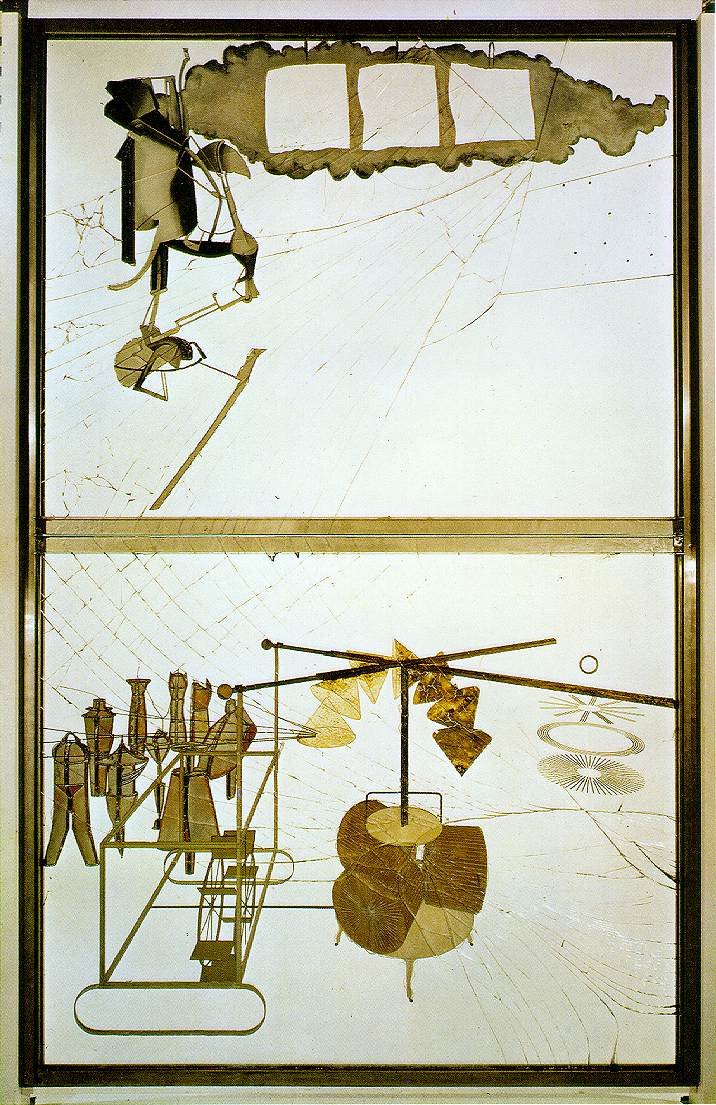
In visual work, you still see all you see.
But Every Story Requires a
Gaiman's answer "George R R Martin is not your bitch" was in reply to a very simple question:
Is it unrealistic to think that by not writing the next chapter Martin is letting me down, even though if and when the book gets written is completely up to him?
His answer, as I understand it, really comes down to this: You paid for what you got, and you can't expect an author to write quality work all the time just the way you like it.
Gaiman is pointing, obliquely, in the direction of Misery, Stephen King's great novel of a writer taken hostage by his #1 Fan, literally writing for his (continued) living.
Fair enough.
(Disclaimer also seems due here -- I didn't like GRRM's first book, didn't buy it, didn't finish it, and I don't think GRRM owes me anything. To each their own; he can skive off in the Bahamas for the rest of his life for all I'm concerned.)
However, I don't think Neil answered the actual question. The question is not Does GRRM have to write every minute of the day, but rather Is a person who begins a popular series allowed to delay finishing it indefinitely, or even quit?
Gaiman's line is that you paid your money for the one book you bought. If it includes the words To Be Continued, rather than The End, them's the breaks.
But, apart from possible post-modern experiments, traditional stories do not get better for not being finished: the Aeneid, the Satyricon, the fragments of Gilgamesh, the Greek comics and tragedians are not improved by surviving in a mutilated state (incomplete, in the case of Vergil).
That is, an incomplete story, no matter how wonderful, is not as good as the whole thing. Viz., a story--whether a short story, a novel, or a series--has a natural momentum toward coming to a conclusion. Anything that interrupts that momentum does so to the detriment of the story.
Great artists certainly owe it to themselves (and future generations, if they're all that good) to complete their vision. But every artist making a living by their art owes it to their patron (whether it's an aristo, subscribers, or a fan base) to deliver a complete work.
Delays are fair. Living your own life is fair. What is patently not fair is when Gaiman writes:
No such contract existed. You were paying your ten dollars for the book you were reading, and I assume that you enjoyed it...
Because certainly there is some kind of contract -- at least, I would argue, after 1) the audience engages with the work emotionally and 2) the artist is paid cash for an incomplete work.
It's an interesting problem. If I start a 7-book series, and everyone hates the first book, I'm clearly not under any obligation (to other people, anyway) to slog through to the end.
But what if I were J K Rowling? What if she finished book 6 and said "Fuck it, rich enough"? What if Warner Brothers had gone ahead and made Deathly Hallows Part I, left it at a cliffhanger and decided never to do Part II?
Love them or hate them, what if George Lucas had just given up and never made Episode III?
Is there not any obligation? I'm not talking about self-entitled obsessives, crazed harassers. In the Lucas example, the people who saw the movie multiple times in the theatre and yet apparently hated every single minute.
No, no. I'm talking about honest, admiring fans who enjoy your work and just want to know how it all ends.
By drawing the line at "not your bitch," it feels to me like an enormous chasm opens up between the artist, to whom all entitlement and credit is due, and the
I just don't want to give money to an "artist" who thinks like that. There is a clear difference between Being a Bitch and Acting In Good Faith. I don't know exactly where it is, but I know it when I see it.
What Kind of Artist? Pro, or Con?
Being a professional artist, working in a narrative series, you must owe something to the audience. The curtain must come down.
Certainly, anyone who finds themselves in the happy condition of having people demand to be allowed to pay for more of your work... well, isn't it a tad arrogant to shout back, "I'm not your bitch!" I mean...if Neil Gaiman ever starts a 3-book series... why would I risk buying #1?
The fact of the matter is simply that George R R Martin started a trilogy. Then it just somehow grew to seven. Time between books went from two years, to five years, to six years. Among all this, the series spawned not just audiobooks and translations, but toys, board games, card games, an HBO series...
And you want to say he doesn't owe anyone an ending?
Is it fair for the artist to make not just a modest success, but become very wealthy, and still have the right to say, I'll get round to it if I feel like it...?
As I say, I don't have any stake one way or another in Martin's sleazy little hack-'n'-slash. But it very much seems to me that the game being played is not, in fact, Would Everyone Please Respect the Artist Hard At Work.
It is, rather, George Martin Better Milk This While He Can.
You can be an artist and a con artist at the same time.
The Boston Globe pinned it on Gilbert Stuart, too:
When Stuart returned to America, the artist from Kingston, R.I., was considered one of the greatest portraitists of his generation and a charmer, despite his reputed alcoholism, stubbornness, vanity, unpredictable delays, and penchant for taking half-payment upfront for portraits he failed to deliver.
You don't have to be a bitch; you don't have to be a son of a bitch, either.
No comments:
Post a Comment